— The transformation of project managers into value creators
The Truth is in The Numbers
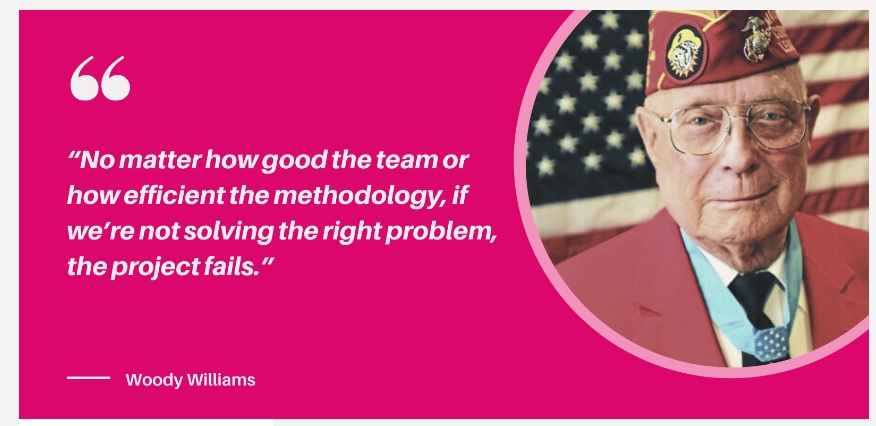
A lack of clear goals is the most common factor (37%) for project failure.
44% of projects fail due to a lack of alignment between business and project objectives.
Three-quarters of projects fail because of a lack of senior management involvement
Lets Understand Project Management Office
In A Guide to the Project Management Body of Knowledge (PMBOK® Guide) – Fifth Edition, the Project Management Office (PMO) is defined as “a management structure that standardizes the project-related governance processes and facilitates the sharing of resources, methodologies, tools, and techniques” (PMI, 2013a, p. 10). In other words, a PMO is a group of people responsible for determining the standards of how projects are managed within an organization.
PMO vs. project manager
As a project manager, you’ll handle all the day-to-day management of the project. They work with the project team to ensure that tasks are completed on time and within budget.
The PMO is responsible for setting and maintaining project standards. As a member of the PMO staff, you’ll help support project teams and project managers while also working with other departments to ensure that projects are coordinated and aligned with organizational objectives.
Benefits of PMO
- Report project status to upper management
- Develop and implement a standard methodology
- Monitor and control project performance
- Develop competency of personnel including training
- Implement and operate PMIS
- Provide advice to upper management
- Coordinate between projects
- Develop and maintain a project scoreboard
- Promote project management within the organization
Redefining Project Management Office
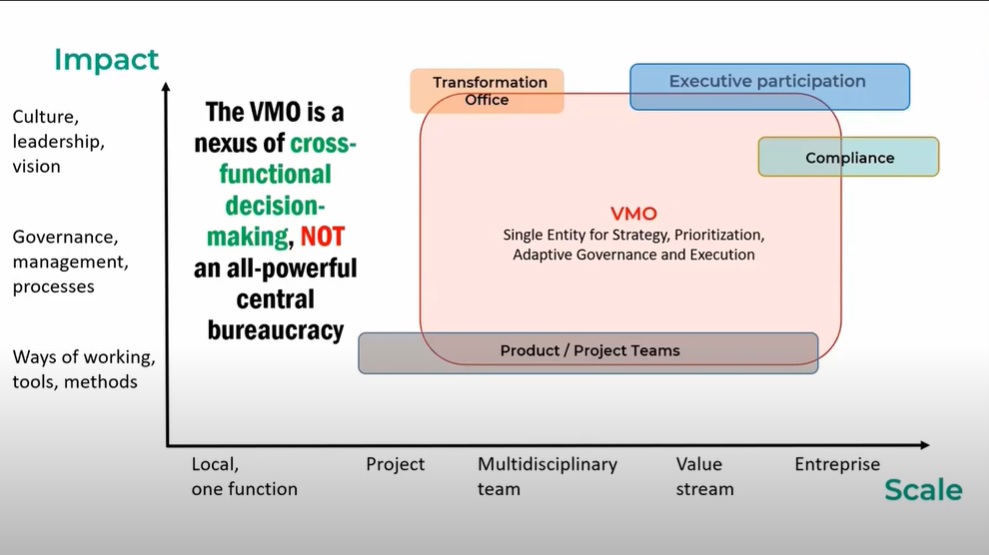
Say Hello to VMO (Value Management Office )
“Strive not to be a success, but rather to be of value.” – Albert Einstein
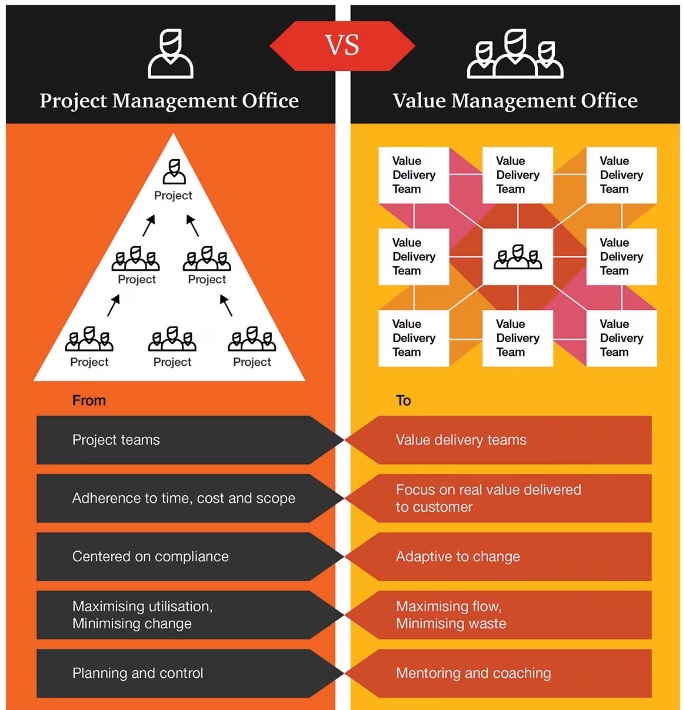
The traditional methods for managing IT programs and teams through PMO are no longer adequate because it is process and compliance driven not value driven.
IT teams must ensure they are sufficiently engaging with stakeholders, effectively identifying the demands and opportunities, and ultimately co-creating value for the organization.
VMO is focused more on individuals and their interactions to generate value delivered to customers in the quickest possible time.
Teams are focused on a continuous delivery of value from concept to cash.
A PMO is a necessary but not sufficient condition for delivering value.
Centers around mentoring and coaching Product Owners, Scrum Masters, the leadership team as well as stakeholders on how to enable and support delivery teams in maximizing the value delivered.
Shifting focus from managing to maximizing value
The VMO turns theory into practice while measuring tangible business benefits, such as the realization of value through increased throughput, lower operating expense, superior ROI, faster speed to market and more reliable delivery to promise.
 accidentalprojectmanager.blog
Leave a comment